Soviet crimes in post war Lithuania and beyond were examined at the discussion at the Embassy
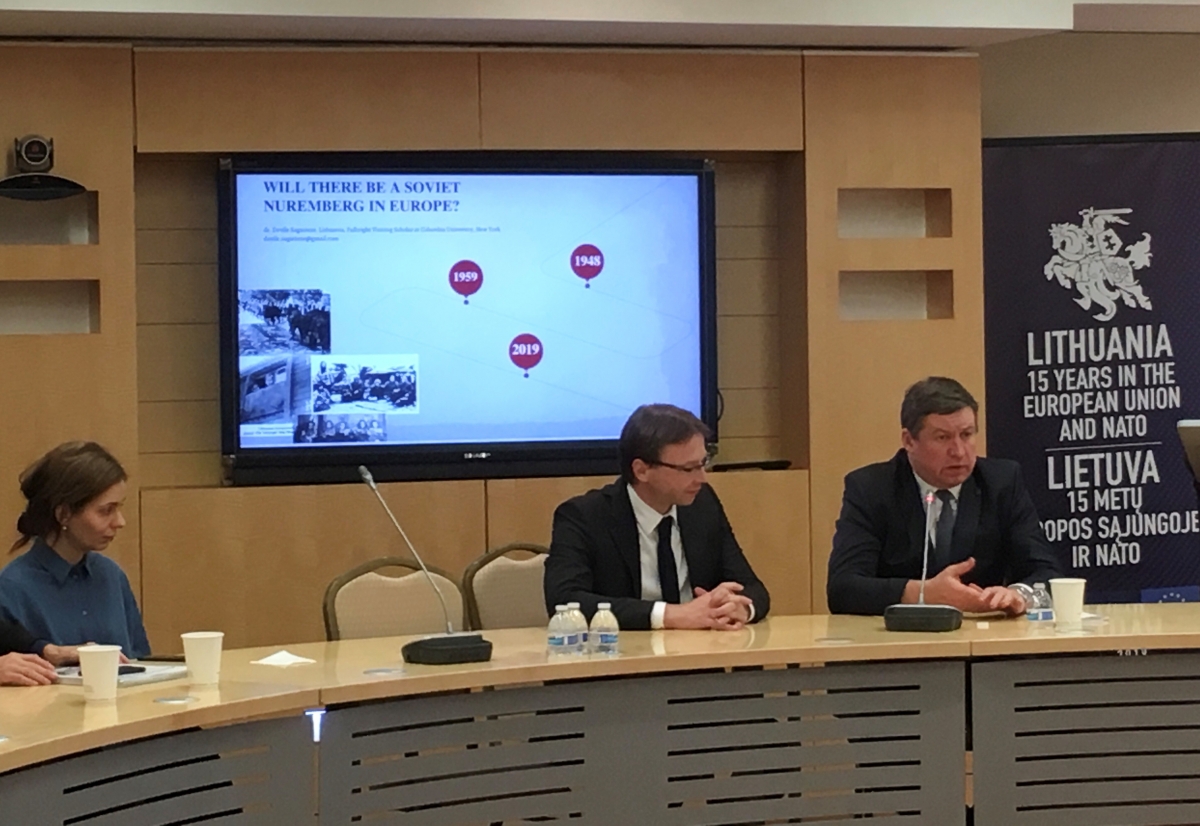
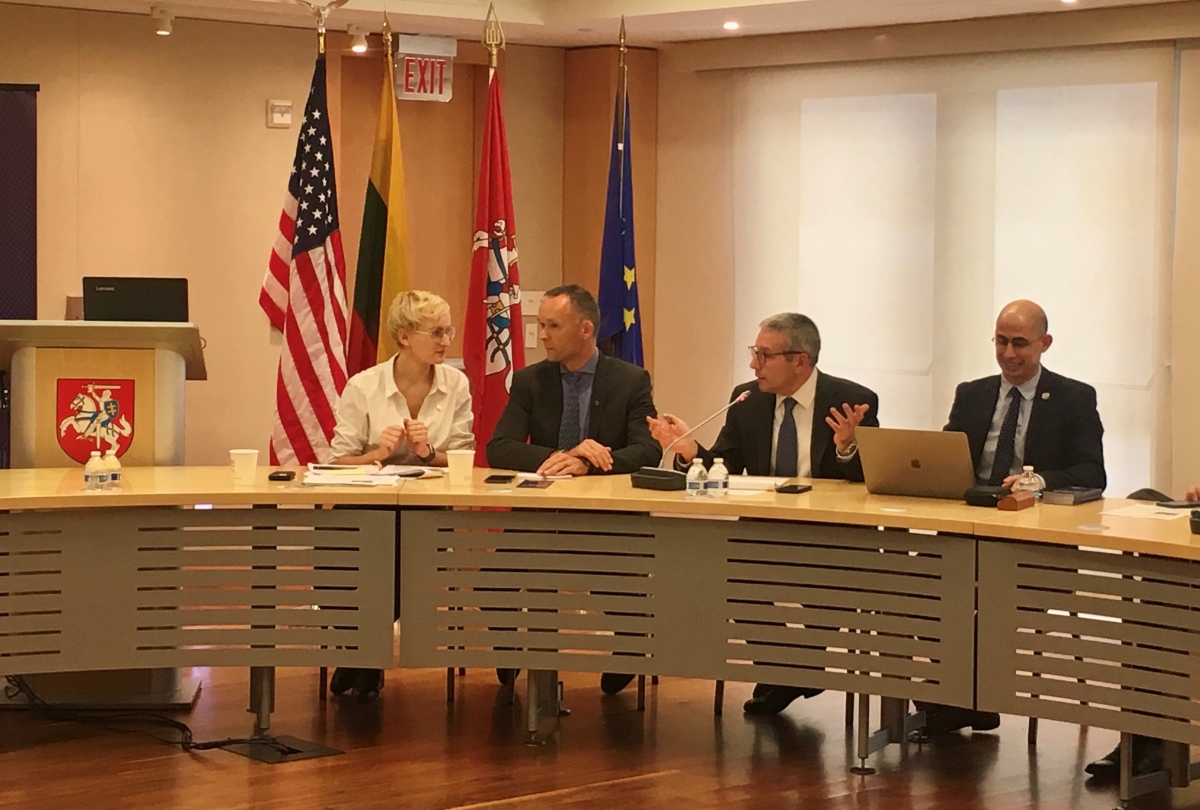
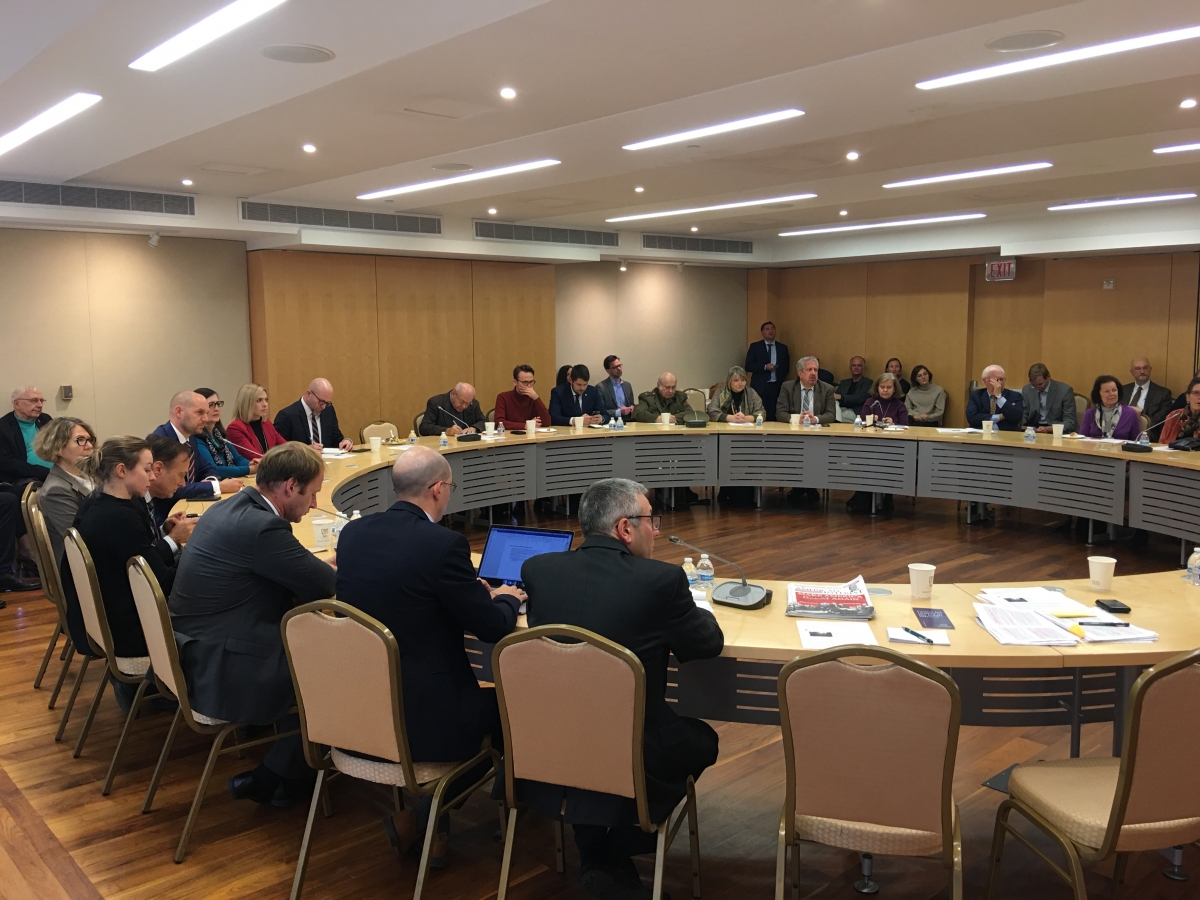
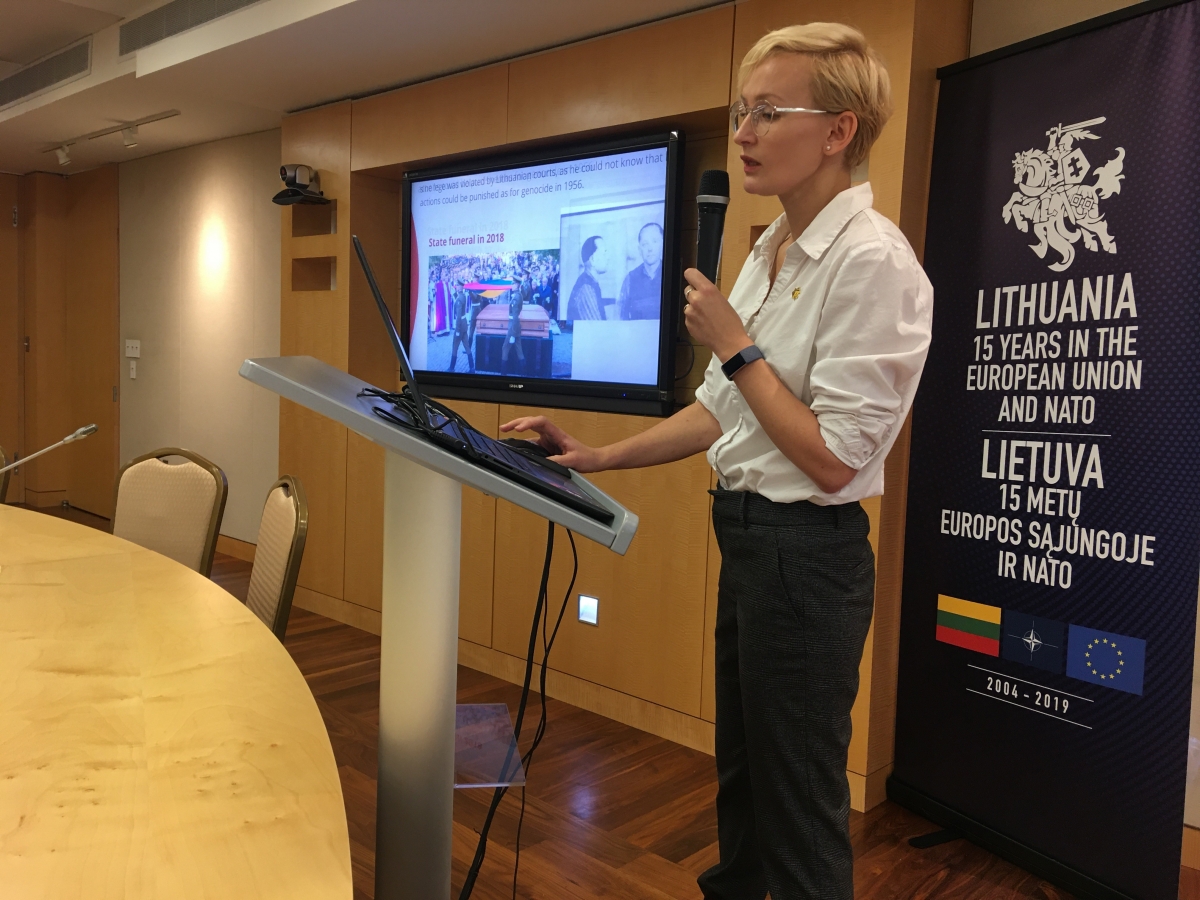
The discussion “Nuremberg that never happened. The case of Soviet crimes in post-war Lithuania” was organized at the Embassy of Lithuania on November 15. In his remarks Lithuanian Minister of Defence R.Karoblis noted that Lithuania celebrates the victory against Nazism, but the end of the Second World War for the country has also another meaning. "It was the beginning of our war against Soviet occupation and national genocide."
“Freedom fights against the Soviet occupation resulted in painful loss for our country. We lost nearly 1/5 Lithuanian nation. The crimes of the Second World War were followed by the Nuremberg trials. Soviet crimes, however, never had their Nuremberg. It is not the trial’s verdict or severity of punishment that matters. The essence of exposing Soviet crimes is to never let them happen again - nor to Lithuania, nor to any other country,” said the Minister.
The main speaker of the event dr. Dovilė Sagatienė, a Legal historian and a Fulbright grantee at Columbia University, analyzed the implication of the 2019 ruling by the European Court of Human Rights regarding Soviet genocide in Lithuania against the partisans (the judgment in Drėlingas v Lithuania case). Will this case become a turning point in evaluating Soviet crimes in all occupied countries? Asked dr. Sagatienė in her presentation.
Mr. Jason Steinhauer, the Director of the Lepage Center for History in the Public Interest, Villanova University, delivered his remarks about the clash of historical narratives, and the use of disinformation in it.
The discussion was moderated by dr. Peter Roudik, Director of the Global Legal Research Center, Library of Congress, Washington DC